


At work, it's essential to handle tasks regularly. There are various methods that help find the best solution in each specific case. Some methods involve an analytical approach, others a creative one, and some a combination of both.
Design thinking belongs to the latter category, combining analytical and creative approaches. It's one of the most popular and effective problem-solving methods, focused on people: their needs and desires. Design thinking is not exclusive to designers or those in creative professions; it's a valuable method in education, science, various businesses, and everyday life. Its main feature is a focus on what is important to users, buyers, and clients when seeking solutions.
If you're new to design thinking, this guide will help you understand the basics and advantages of the method.
Stages of Design Thinking
The design thinking process consists of several stages, each of which helps in reaching innovative solutions.
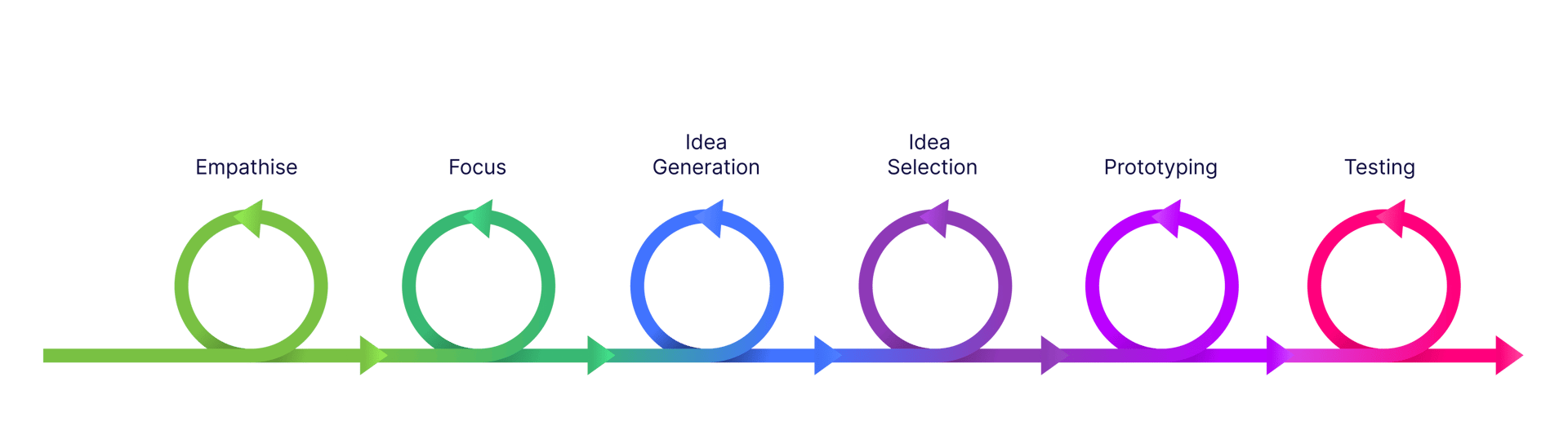
Empathy
This stage involves immersing ourselves in the user's world. Our goal is to understand what people do, why they do it, how they perceive the surrounding world, what emotions, values, and needs they have. At this stage, we focus on the individual: conducting interviews, observing interactions with the environment and others.
Focus
During this stage, it's essential to process all the information gathered to grasp the overall picture, highlight the most important aspects, and formulate the problem or task we want to solve. The only way to find the right solution is to understand the problem correctly.
Idea Generation
Generate as many ideas as possible, from the obvious to the boldest and most absurd. It's crucial to allow your creative side to shine, breaking free from the usual logical constraints.
Idea Selection
This is the shift from defining the problem to finding a solution for the user. To identify viable ideas from all that has been formulated in the previous stages, they need to pass through filters.
Prototyping
This stage involves creating prototypes of the selected ideas that appeared to be the most viable. It should be something simple and cost-effective in implementation because failures are inevitable on the path to success. It's crucial to handle them quickly and inexpensively. Ultimately, the prototype should help visualize the idea and test the solution with real people.
Testing
At this stage, gather feedback from actual users on the potential solution to delve deeper into the problem you're working on. Testing will help identify strengths and weaknesses, making necessary adjustments. One prototype is more illustrative and valuable than a thousand words that were never put to the test in practice.
Advantages of Design Thinking
Human-Centric Approach
Design thinking begins with deep empathy, understanding the needs and motivations of people. Certain fields strongly intersect with this approach, such as medicine, where understanding and considering the conditions of patients, doctors, pharmacists, and other medical staff are crucial. This close personal interaction helps successfully address diseases and ailments. The method is entirely focused on people and their real needs.
Experimental Nature
The method not only allows for mistakes but encourages them. It's practically its essence: you study behavior, come up with new ideas, receive feedback, make changes, and repeat. Design thinking is primarily about learning through practice.
Courage and Optimism
Design thinking involves a profound belief that each of us can make a difference, regardless of the scale of the problem or the constraints of time and money. Regardless of limitations, design and creating something new can be a enjoyable process.
Collaboration
Design thinking implies close interaction and collaboration among various specialists—business leaders, top managers, experts from relevant fields, users, developers, and so on—to create comprehensive and holistic solutions.
How to Start Applying Design Thinking
So, what does it take to begin applying design thinking in your work or business? Here are the key steps:
Learn the Basics: Study the fundamentals of design thinking, take online courses, and read literature. This will help you understand the core principles of the method and involve your colleagues in its use.
Invite Design Thinking Practitioners: Bring people into your team who apply design thinking and inspire others to do the same. They'll be agents of change and sources of new ideas.
Gain Leadership Support: Secure support from leadership to have the freedom to experiment and implement new approaches without constraints.
Collaborate with External Labs and Experts: Work with external labs and specialists to stay abreast of new trends and initiatives.
Implement Quick Wins: Introduce a plan for quick wins. Small but noticeable results will inspire the team and leadership to move towards larger goals.
Cultivate a Culture of Experiments: Lay the foundation for a culture of experiments. Remember that design thinking involves iterations and mistakes. Develop through practice, taking feedback into account.
Engage Users Across Roles: Involve users in testing hypotheses, not just marketers, but also other specialists like salespeople, engineers, and managers.
Start Small and Practice: Begin with small steps and practice design thinking in your everyday life. This approach will infuse creativity and efficiency into any activity. The more you practice, the better you'll become at using this method.