


So, how do designers think? This question is at the heart of an entire field of research connected to the development of the method.
One of the first to delve into the topic of design thinking was John E. Arnold in the 1950s. He was a professor of Mechanical Engineering and Professor of Business Administration at the Massachusetts Institute of Technology, later at Stanford. It was John Arnold who suggested bringing together design and engineering as areas of knowledge to explore the effectiveness of a creative approach in design. Additionally, he was the pioneer in articulating the idea of design being centered around people. His scholarly works have significantly shaped the contemporary understanding of the method.

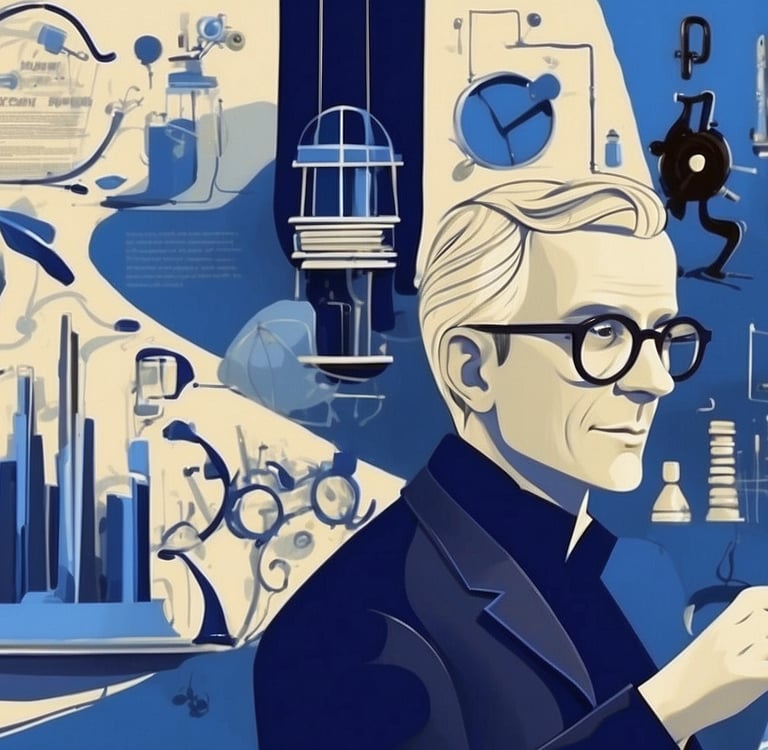
In the 1960s to 1980s, various researchers were engaged in design thinking: Horst Rittel, Herbert Simon, Nigel Cross, Donald Alan Schön. They were able to expand our understanding of this topic. Here are some of their key points:
When developing a product, it's crucial to consider the desires and needs of users.
Designers possess a unique mindset and methods of work that are as valuable as the scientific approach.
Technical rationality in design is not as effective; the combination of rational and creative approaches helps find better solutions.
The strength of design lies in the diversity of its expressions, allowing for the creation of unique products and finding more precise solutions in each specific case.
You can learn more about these scholars in the article "Design thinking origin story plus some of the people who made it all happen."
Many researchers aim to understand how the minds of designers work. Books, articles, and lectures emerge, presenting various models and concepts on the subject.
However, it's still theory; full comprehension comes with real-world experience. So, let's now shift our focus to practical applications.
One well-known and widely-used design thinking process, still employed today, was introduced by IDEO. This is one of the most successful design companies with numerous significant projects under its belt. For instance, its employees developed the first mouse for Apple.
Currently, the company has thousands of employees across various fields – from branding to healthcare. Their success is attributed to a culture, processes, and a way of working known as "design thinking," which involves applying design approaches to problem-solving in different domains.
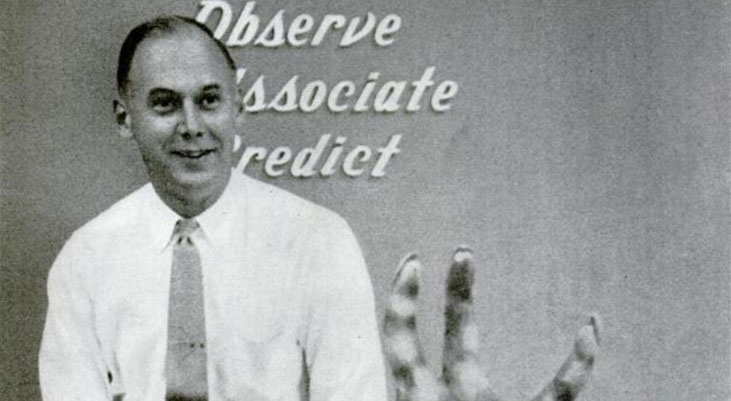
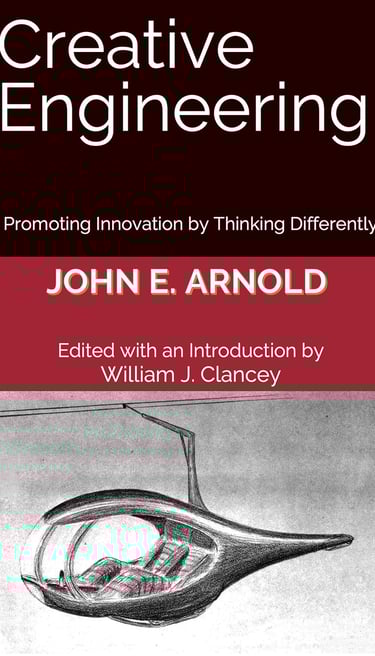
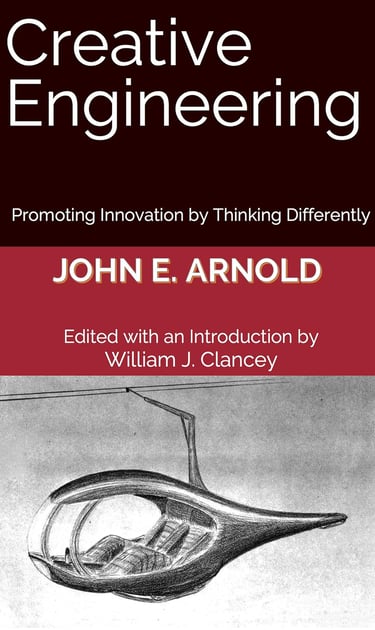
John E Arnold and his book Creative Engineering: Promoting Innovation by Thinking Differently


IDEO's founder, David Kelley, graduated from Stanford in the late 1970s, where he studied design in a program established by John Arnold, the very first researcher of creative thinking methods in design.
In the 1990s, IDEO was actively using design thinking but had not yet turned the method into a brand or product. Even in the 1999 television show "Nightline," which provided a detailed account of IDEO, there was no mention of design thinking. In 2001, Tom Kelley, David's brother and business partner, wrote the book "The Art of Innovation," and there are no mentions of the method in it either.
In the 2000s, the commercialization of design thinking began, as evident in Tom Kelley's books. In 2005, he released "The Ten Faces of Innovation," where design thinking is mentioned only three times. In 2013, collaborating with David Kelley, he published "Creative Confidence," which features over 40 mentions. The shift is quite pronounced. Perhaps, this increased attention to the method is linked to the emergence of Tim Brown, the new CEO of IDEO.
In the 1980s, Tim Brown studied at Northumbria University and the Royal College of Art, where he engaged in design research and explored its philosophy. After completing his education, he actively began promoting the effectiveness and benefits of design methods within the business community. You can find hours of his discussions on this topic on YouTube. Additionally, Tim Brown authored the book "Change by Design," in which the term "design thinking" is mentioned 150 times.
So, that was a brief history of the development and application of design thinking. What about now? The method enjoys immense popularity, with various variations like IBM Enterprise Design Thinking and Google's Design Sprints. However, it is still remarkably underestimated. Sometimes, even among those who practice, sell, and teach it.
The essence of the method is not about becoming a designer.It doesn't provide a universal solution. All the books and courses on design thinking from IDEO that I've read and completed help emphasize that you can't implement and use the method with a one-size-fits-all approach. Its application is more like a set of exercises in a gym that you need to attend regularly to achieve results over time. But it will be worth all the effort you put into it.


David Kelley, IDEO's founder. The image was sourced from IDEO.com