
We've discussed the theory of design thinking; now, let's talk about its application: who it has already helped and how. Let's explore one example.
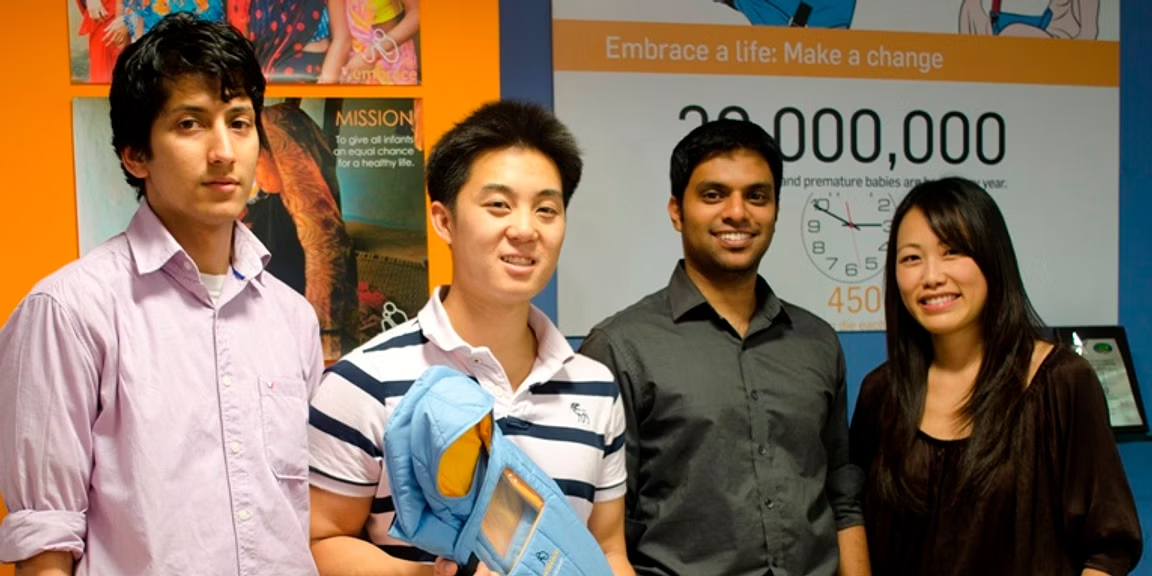
Four students from Stanford University, as part of the Design for Extreme Affordability course, created a practical and in-demand product. Jane Chen, Linus Liang, Naganand Murty and Rahul Panicker developed an affordable portable infant warmer. Leveraging design thinking, the students found success with their project.
Their warmer is 99% cheaper than traditional incubators, making it accessible not only in hospitals but also at home. This invention has contributed to saving nearly half a million premature infants in developing countries.
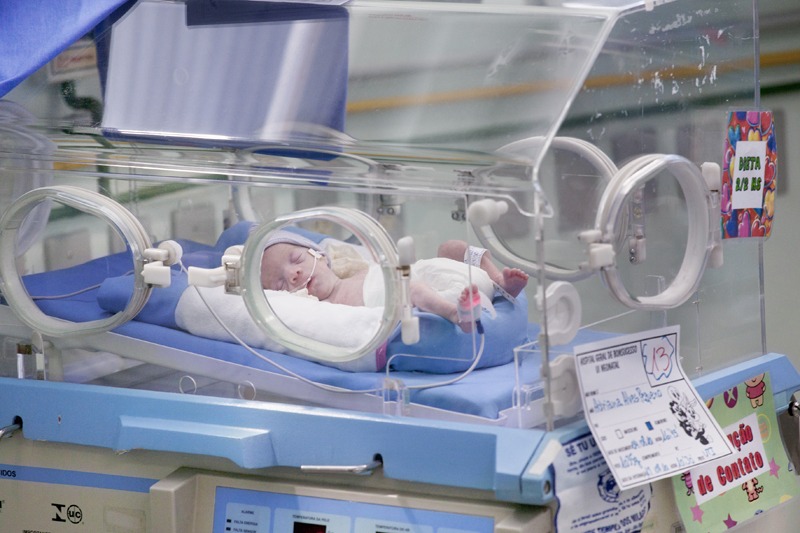
Premature incubator | Hospital de Bonsucesso in Rio de Janeiro | 2010
Prematurity is one of the leading causes of infant mortality. Premature infants lack sufficient fat and are unable to regulate their body temperature on their own. In developed countries, babies born after 32 weeks almost all survive. In impoverished nations, only about half do.
Left to Right: Naganand Murty , Linus Liang, Rahul Panicker and Jane Chen. The image was sourced from https://yourstory.com/
The team members were engineers, programmers, and managers, not doctors. Initially, they planned to simply reduce the cost of equipment, using cheaper materials. However, later, the team decided to change their approach: they started with empathy, basing their efforts on real human experiences and needs.
Linus Liang traveled to Nepal to engage with people, learn about their daily routines, and understand what mattered to them.
When he was in the city hospital, he noticed that many donated incubators stood empty. Although the children needed them, especially in the villages. This situation revealed that there was a reason why people couldn't benefit from the help provided to them.
It turned out that young mothers simply couldn't afford to get to the hospitals with incubators: they lacked the money for the journey. And the equipment couldn't be used at home because it operated on electricity, which was not available in the village. As a result, premature babies often died due to a lack of necessary care.
This information helped understand that parents needed the ability to use the heater at home; it had to be compact and work without electricity.
Empathy
Upon returning to Palo Alto, the team faced the challenge of prioritization.
On one hand, it was evident that something was needed to assist mothers and children in villages. However, their initial task was to create an affordable incubator for hospitals. The students deliberated on whether to stick to the original task or focus on the needs of people—develop a solution for mothers in remote areas.
After some debate, they reframed the task and started working on how to create a device for warming infants to help children in distant villages survive. Since then, the team has been oriented toward the needs of children and their parents.
Focus
After identifying the problem, the students moved on to idea generation and prototyping.
They came up with numerous ways to create a device that would operate without electricity.
After several rounds of prototyping, the team successfully developed a simple yet effective solution: a heater in the form of a small pouch with a paraffin filler. It could retain heat for up to 4 hours after heating. Such a device could be used outside the hospital to warm an infant to the required temperature.
Idea Generation and Prototyping
To understand and consider the cultural nuances of future users, the team brought the prototype to India. There, they noticed things they hadn't seen in Silicon Valley.
Rahul was once demonstrating the prototype of the heater with a temperature indicator to mothers. One of them expressed mistrust and wariness. It turned out that in her community, mothers believed that Western doctors prescribed effective but overly powerful medicines. When a doctor prescribes a teaspoon of cough syrup, they only give half to their children. This woman said, "If you ask me to heat this heater to 37°C, I'd rather heat it only to 30°C or so."
Testing
After Testing Upon learning about the distrust of doctors, the students decided to address it through design. To eliminate the need for mothers to calculate the temperature themselves, they replaced the thermometer with a temperature indicator. Now, when the temperature is right, it simply displays "OK."
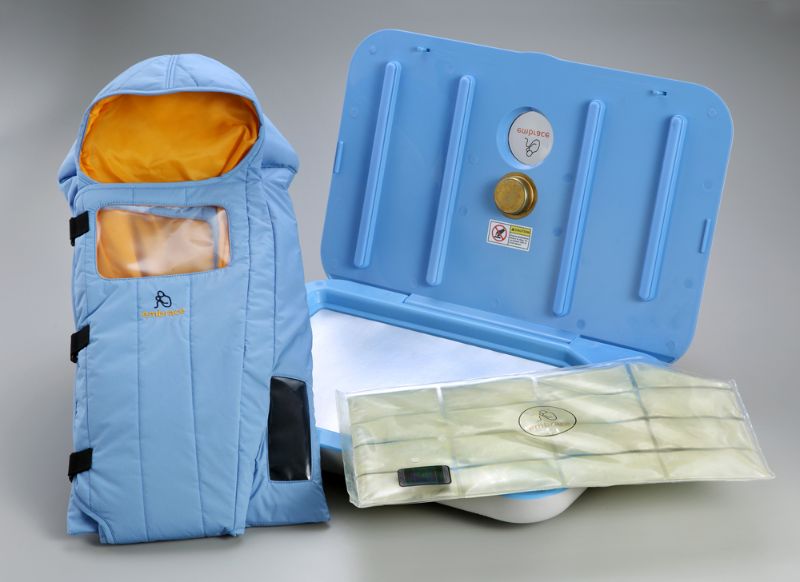
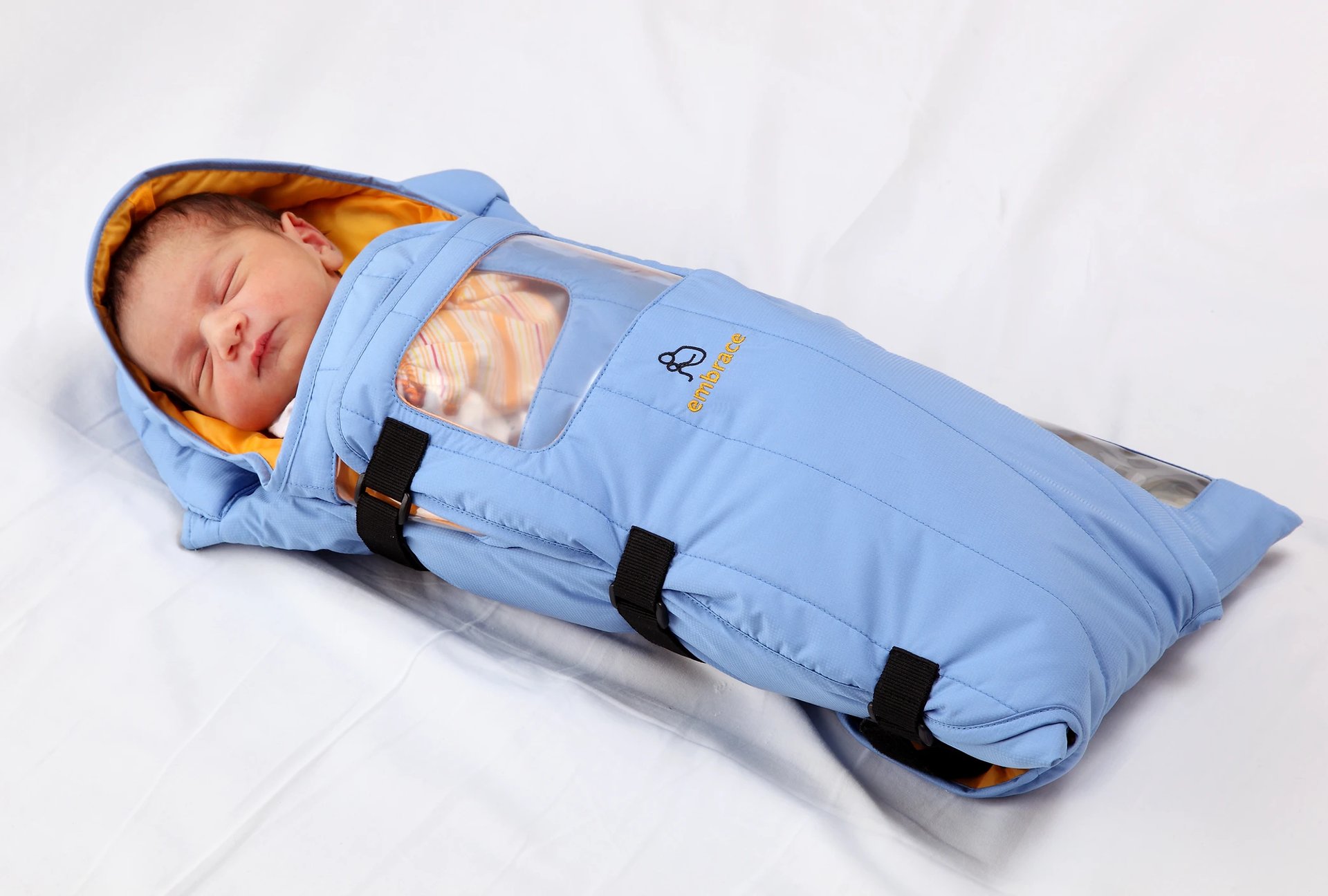
Currently, the Embrace Infant Warmer, designed to keep newborns warm, resembles a miniature sleeping bag. It utilizes a special wax element that can be heated with hot water or electricity. It can maintain the baby's body temperature as needed for 4-6 hours.
Improvements
How It Works:
A special paraffin-filled pouch is heated using electricity or hot water.
Within 20 minutes, the pouch is heated to 37°C (98.6°F)—the temperature crucial for a baby's survival.
The heated pouch is placed inside a sleeping bag, and then the baby is placed inside. The pouch can be reheated multiple times, and an indicator shows when it's necessary.
The sleeping bag will maintain a temperature of 37–35°C for at least 4 hours. The special material will absorb or release heat based on the baby's needs.
Embrace Nest Warmer. The image was sourced from https://viaglobalhealth.com/
Product Advantages:
Low cost. Embrace Infant Warmer is designed to be accessible to people in developing countries and extreme conditions, such as disasters, wars, etc. This makes it convenient for combating hypothermia in newborns.
Temperature maintenance. The device keeps infants warm, allowing them to survive and thrive.
Ease of use. The intuitively designed product helps people of all backgrounds quickly understand how to use the warmer.
Reusable. The device doesn't become unusable after one application; it can be used until the baby no longer requires it.
The portable infant incubator by Embrace Global
Doctors from various countries have successfully implemented the Embrace Infant Warmer. The device has significantly reduced mortality rates among premature newborns.
This story illustrates the success and effectiveness of design thinking. The method enables the discovery of innovative, accessible, and beneficial medical solutions that save lives and enhance health.
Results
After Russia's full-scale invasion in February 2022, many Ukrainians with newborns found themselves in extremely dangerous conditions. During air raids, doctors used blankets to keep fragile infants warm in cold shelters. Sometimes, medical professionals had to manually assist children with breathing because they couldn't deliver specialized medical equipment to those areas.
Watch the video for more on the challenges parents of premature babies are facing in Ukraine.
Impact in Ukraine

By July 2023, the Embrace organization provided 150 portable infant warmers to UNICEF (the United Nations International Children's Emergency Fund), which has distributed them to hospitals in Dnipro, Sumy, and Pokrovsk. In the ongoing war situation, with intermittent power supply in Ukraine, these warmers are helping save children's lives.
You can contribute to supporting infants in Ukraine by making a donation through UNICEF.
Subscribe to My Blog Updates
Stay informed about our updates on People-Centric Design approaches in the Medical Field using time-honored email delivery methods. Give it a try 💌